Plantation Forestry Fire Risk: A Crop You Can't Move
A plantation is thirty years of compounding investment standing in the open. What makes its fire risk different, and what can actually be done about it.

Matthew Robards
Most of the assets we model can be described in a sentence: a substation, a homestead, a mill, a stretch of transmission line. A plantation is harder. The asset is the fuel. The thing you are trying to protect is the same thing that carries the fire.
That single fact shapes everything about fire risk in commercial forestry, and it is why a plantation estate needs a different conversation from the one we have with a utility or a council.
Thirty years standing in the open
A softwood rotation in Australia runs roughly twenty-five to thirty-five years from planting to final harvest. Every one of those years carries cost — establishment, weed control, thinning, pruning, roading, rates, insurance — and none of it returns anything until the trees come off. The value curve is back-loaded and steep.
A fire in a mature compartment does not knock a percentage off this year’s revenue. It removes three decades of compounding investment in an afternoon, and it removes it from a specific point in the estate’s age-class structure — which means the gap shows up again as a hole in the harvest schedule ten, fifteen, twenty years later. The loss has a long tail.
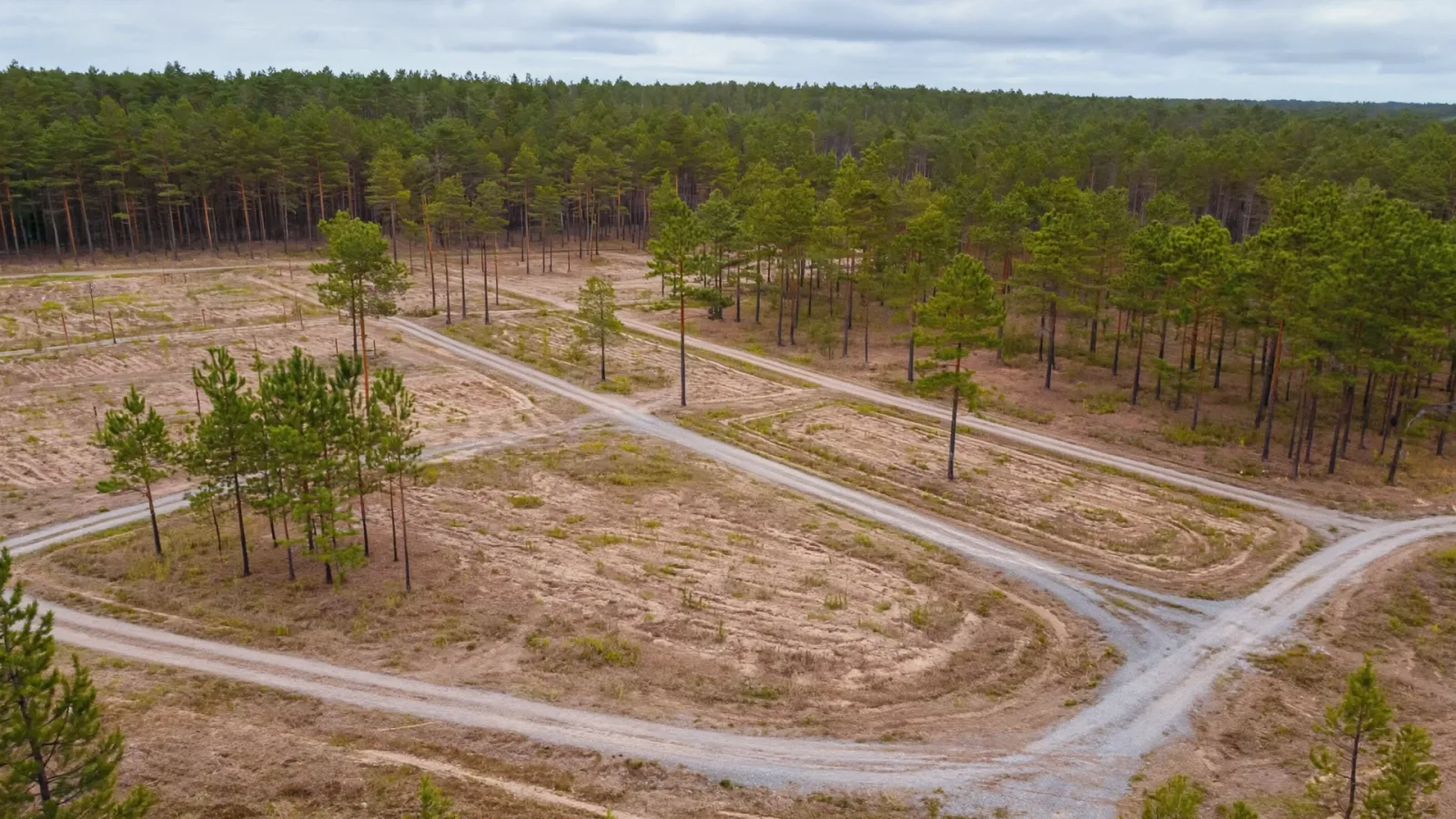
Compartments at different points in the rotation, separated by the road network. A fire removes value from a specific age class — and the estate feels it again as a gap in the harvest schedule two decades later.
Salvage narrows that, but not by much and not for long. Burnt logs degrade, blue stain sets in, and mills can only absorb so much salvage volume at once before the price collapses. The window is measured in months, and every grower in the fire ground is trying to use it at the same time.
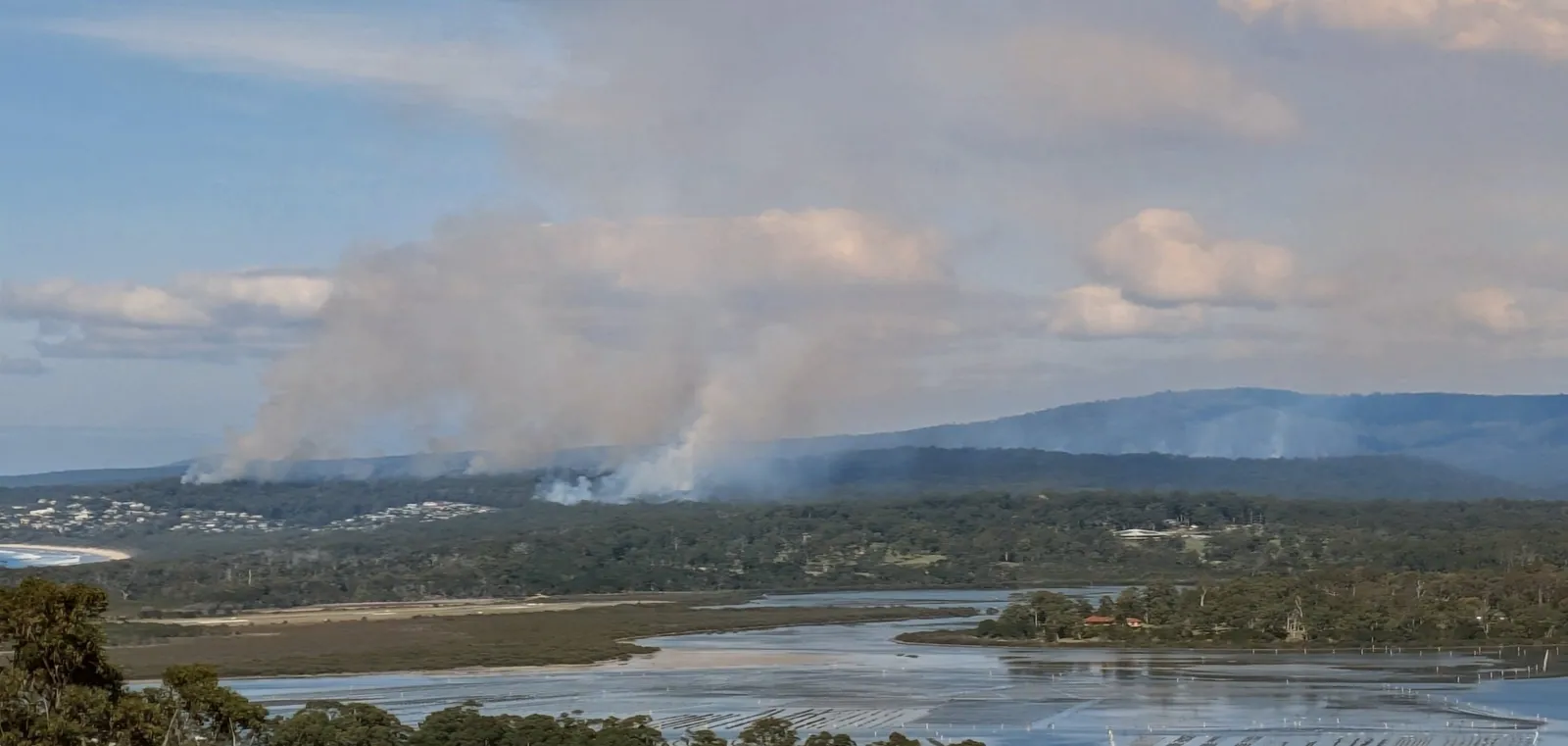
Then there is the part that never appears on the estate’s own balance sheet. A plantation region is usually a processing region: mills, chip terminals, haulage contractors, a town’s worth of employment. Our Tuan Mill case study is really a story about that dependency — the fire never reached the mill, but for a while nobody could say whether it would, and the decisions being weighed in those hours were about a customer’s facility as much as about pine compartments.
Why plantations burn the way they do
Uniformity is the point of a plantation and it is also the problem. Even-aged, evenly spaced, single-species stands produce something a natural forest rarely does: continuity. Continuous canopy, continuous litter depth, continuous fuel structure over thousands of hectares, with few of the breaks in age and species that interrupt a fire in native bush.
Some consequences of that:
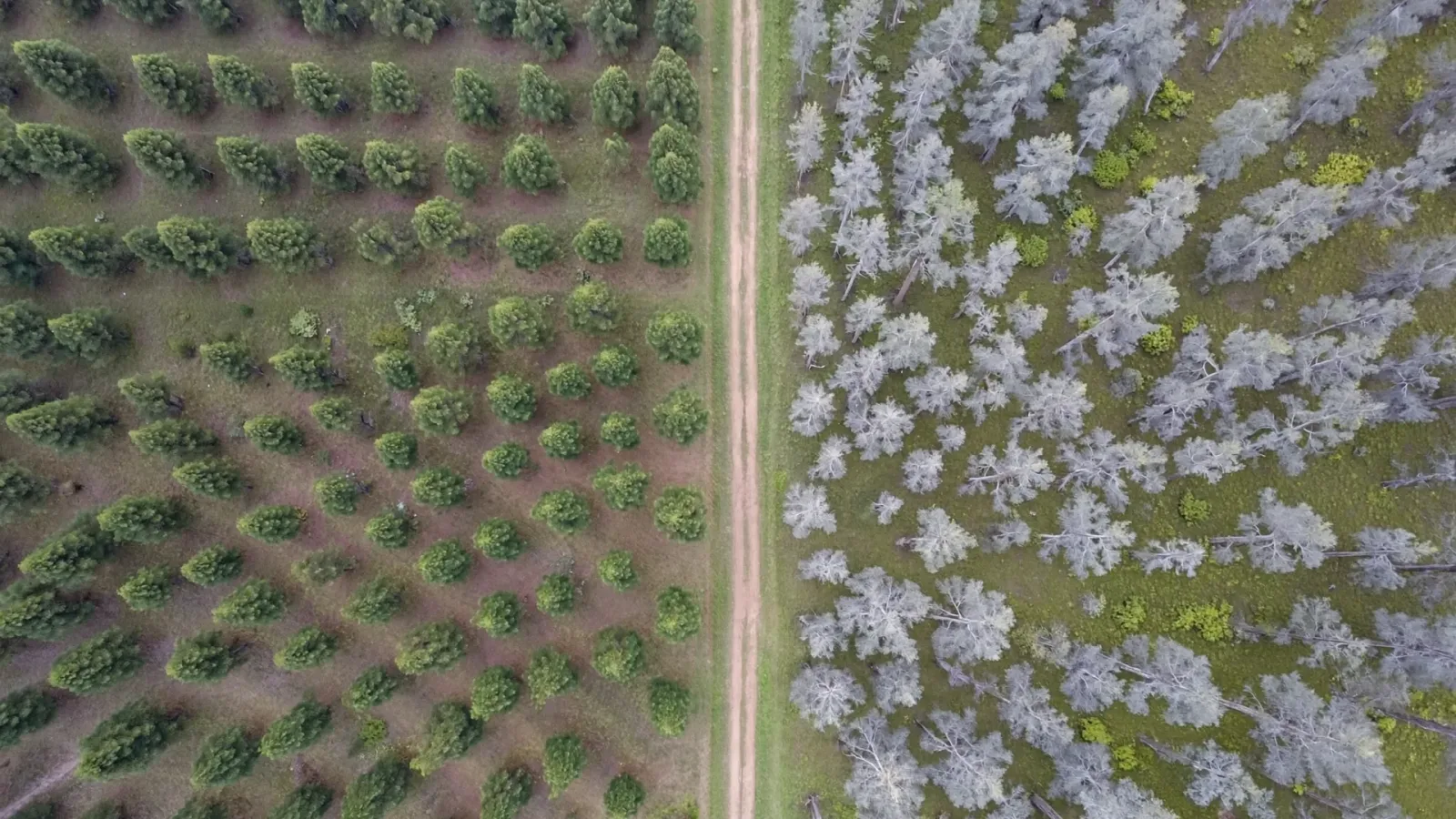
- Ladder fuels are structural, not incidental. In an unpruned or unthinned stand, dead lower branches connect the litter bed to the crown. Once fire gets into the canopy of a dense softwood compartment, suppression stops being a realistic option in the run.
- Litter accumulates faster than it decomposes. Pine needle beds build a deep, well-aerated fuel layer that ignites readily and holds heat.
- The estate’s own infrastructure is the mitigation. Rides, roads, firebreaks, dams and tanks are the network you fight from. Where they sit relative to prevailing fire weather matters more than how many kilometres of them you have.
- The boundary is where the fire usually starts. Ignition rarely originates inside the compartments. It comes off the road, the neighbour, the native margin, the powerline — and the interface between plantation and everything else is where treatment does the most work.
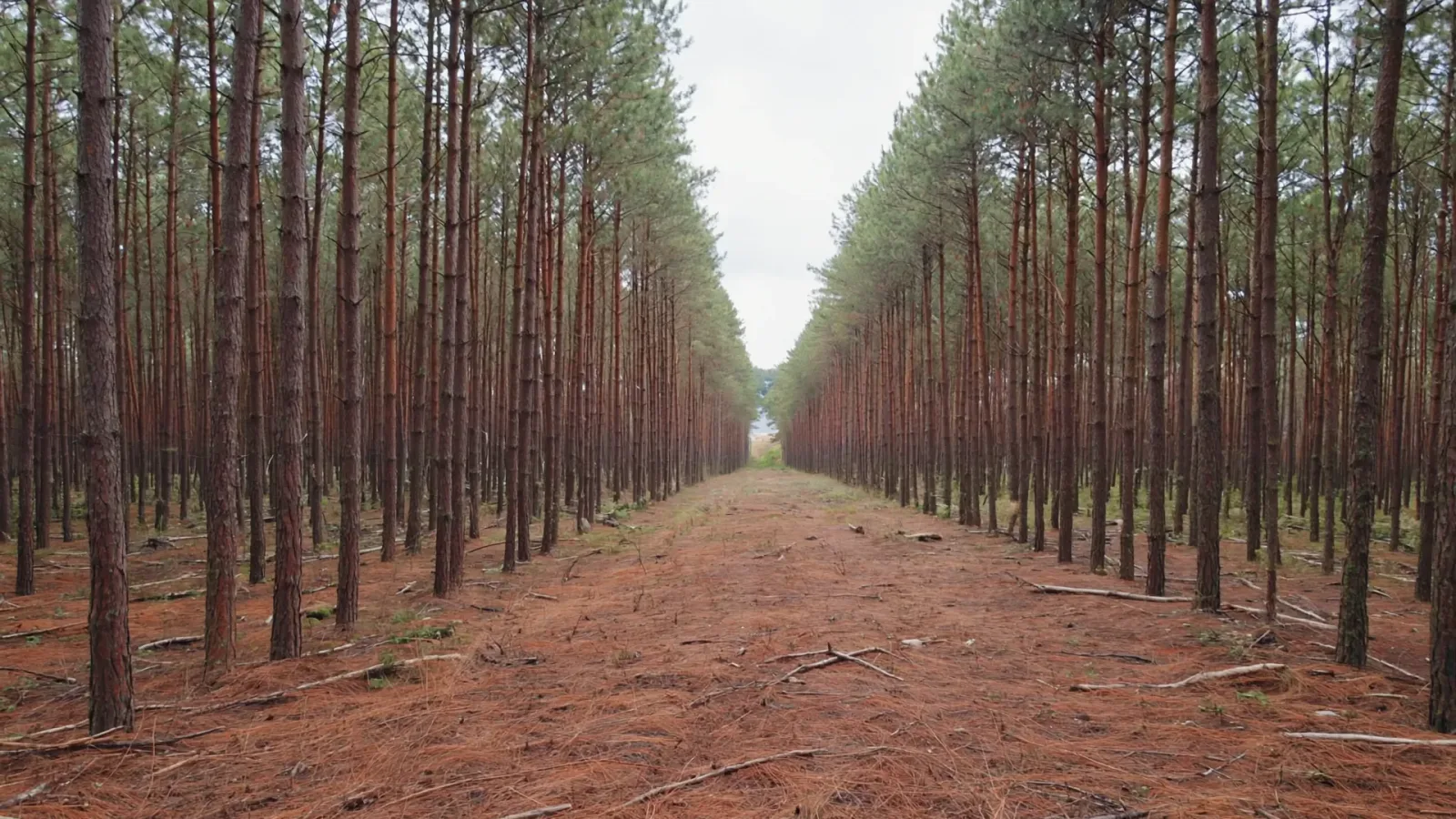
The two fuel layers that matter, in one frame: a deep, well-aerated needle bed on the floor, and dead lower branches connecting it to the crown.
The treatment problem
Fuel management inside a plantation is constrained in ways that catch people out if they have come from a public-land background. You cannot put a prescribed burn through a young pine compartment — you would kill the crop. You cannot burn a mature stand without accepting scorch and growth loss. For long stretches of the rotation, fire is simply not available as a tool inside the estate.
What is left is a narrower and more operational set of levers:
- Thinning and pruning, which are silvicultural decisions first and fuel decisions second — but they change crown continuity and ladder fuel structure, and the timing is yours to choose.
- Mechanical treatment on rides, breaks and boundaries: slashing, mulching, mowing, blading.
- Grazing on the margins and in the wider breaks, keeping fine fuel down where machinery is expensive to run repeatedly.
- Prescribed burning in the native vegetation around and between compartments, which is usually where the estate’s real exposure sits.
- Access and water, which are not fuel treatments at all but determine whether anything can be done in the first two hours.
Every one of these costs money and competes with the others for a fixed annual budget. The question is never whether treatment works. It is which treatment, where, and in what order.
Testing the plan before the season tests it
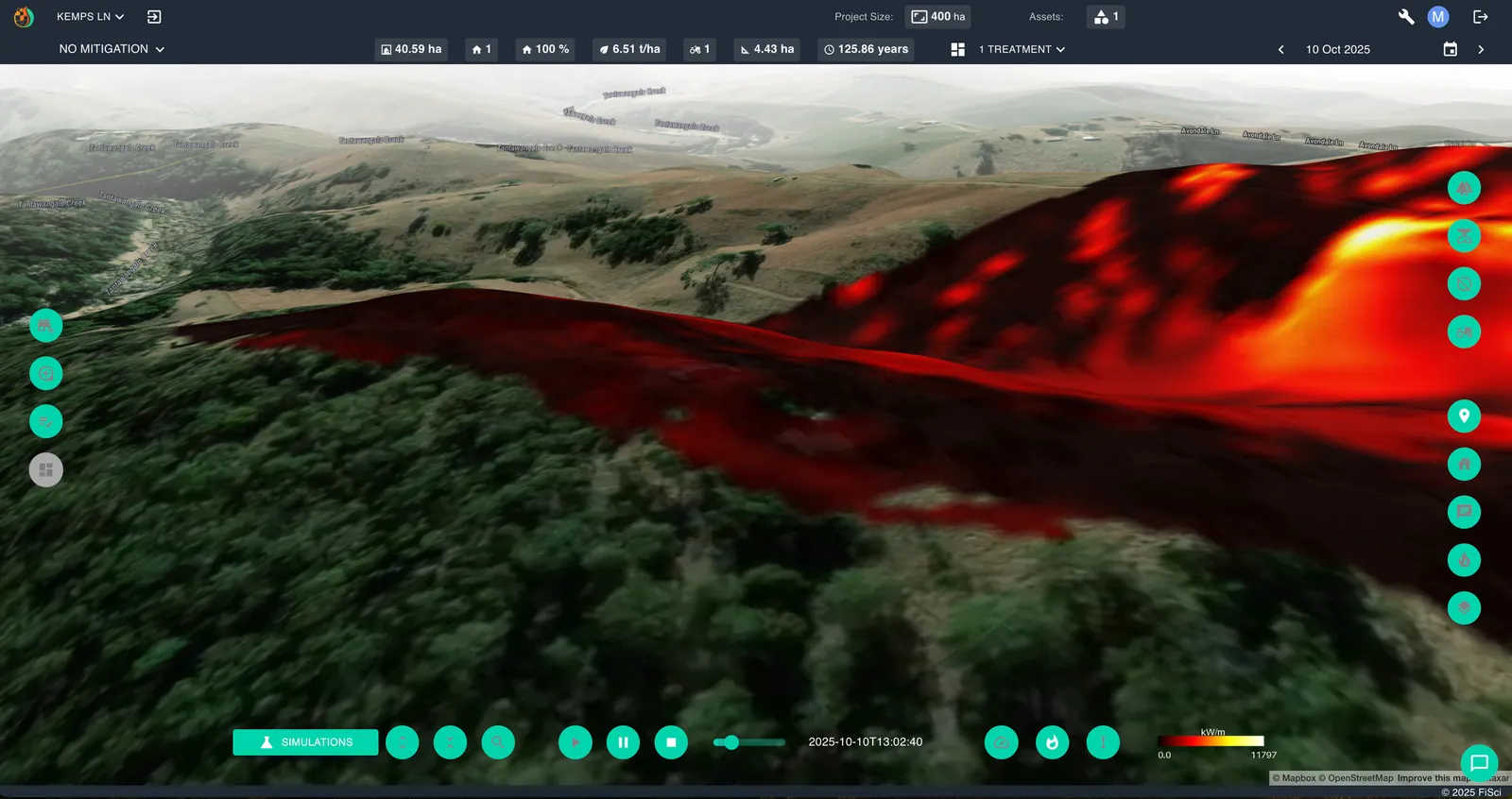
This is the part simulation is actually for. If you can model fire across the estate under the weather that worries you, you can put a proposed programme of works up against the same set of ignitions and see what each option removes from the risk — and what it costs to get there.
That runs on two clocks at once.
The estate clock is measured in years. Which breaks earn their maintenance budget. Whether a boundary burn in the native margin protects more standing value than the same spend on mechanical treatment inside the compartments. How age-class structure changes exposure as this year’s plantings grow into next decade’s ladder fuel. These are questions you can answer in autumn, with time to plan.
The incident clock is measured in hours. Where the front will be by nightfall, which compartments are in the path, which break is worth committing crews to and which one the fire will cross anyway. At Tuan Mill a sixteen-hour projection was enough for the incident management team to hold a strategy rather than fall back on a defensive burn-out next to a customer’s facility — and the burnt area, in the end, closely matched what the model had drawn.
The two clocks are the same model. Work done on the slow one is what gives you options on the fast one.
The long game
Forestry has always thought in decades. Fire is the one variable capable of collapsing that horizon into a single bad afternoon, and the industry has generally responded with experience, local knowledge and a hard-won feel for how a particular estate burns.
None of that is going away. What simulation adds is the ability to test that judgement before committing to it — to try a season’s programme against a hundred fires it might have to face, and know which version of the plan leaves the least standing value exposed.
If you manage a plantation estate and want to see what that looks like on your own ground, get in touch.