Kemps Lane Fire: From Simulation to Operational Reality
Introduction
As a co-founder of FiSci and a volunteer firefighter with the NSW Rural Fire Service, fire is a central focus of my professional and volunteer activities. These activities typically manifest as either software development or direct, on-ground firefighting response. An event last Friday, however, provided a rare and direct convergence of these two distinct domains.
Early Warning and Initial Simulation
While concluding my professional duties for the week, I received an alert via the ‘Hazards Near Me’ app regarding a grassfire that had ignited just west of Candelo. An understanding of the local fuel types, specifically the highly volatile African lovegrass prevalent in the region, combined with the prevailing warm, dry, and windy meteorological conditions, suggested a high potential for rapid fire development.
Out of curiosity, I initiated a simulation in our fire modelling software – FiSci Mitigate estimating the ignition point and utilising the integrated weather forecast data for the specific day of the event.
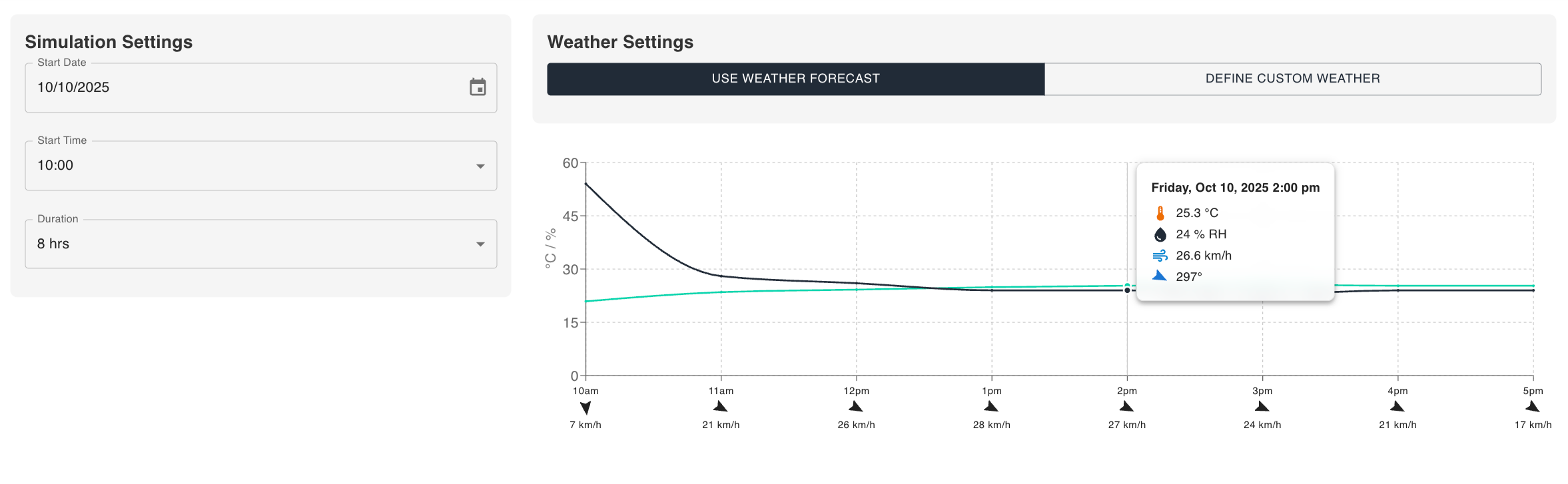
Caption: The weather forecast data within the Mitigate platform, which was utilised for the fire spread simulation.
The simulation results provided a clear projection of the fire's potential behavior. The model predicted rapid propagation in a south-westerly direction, with the fire's advance likely to be halted at Kemps Lane.
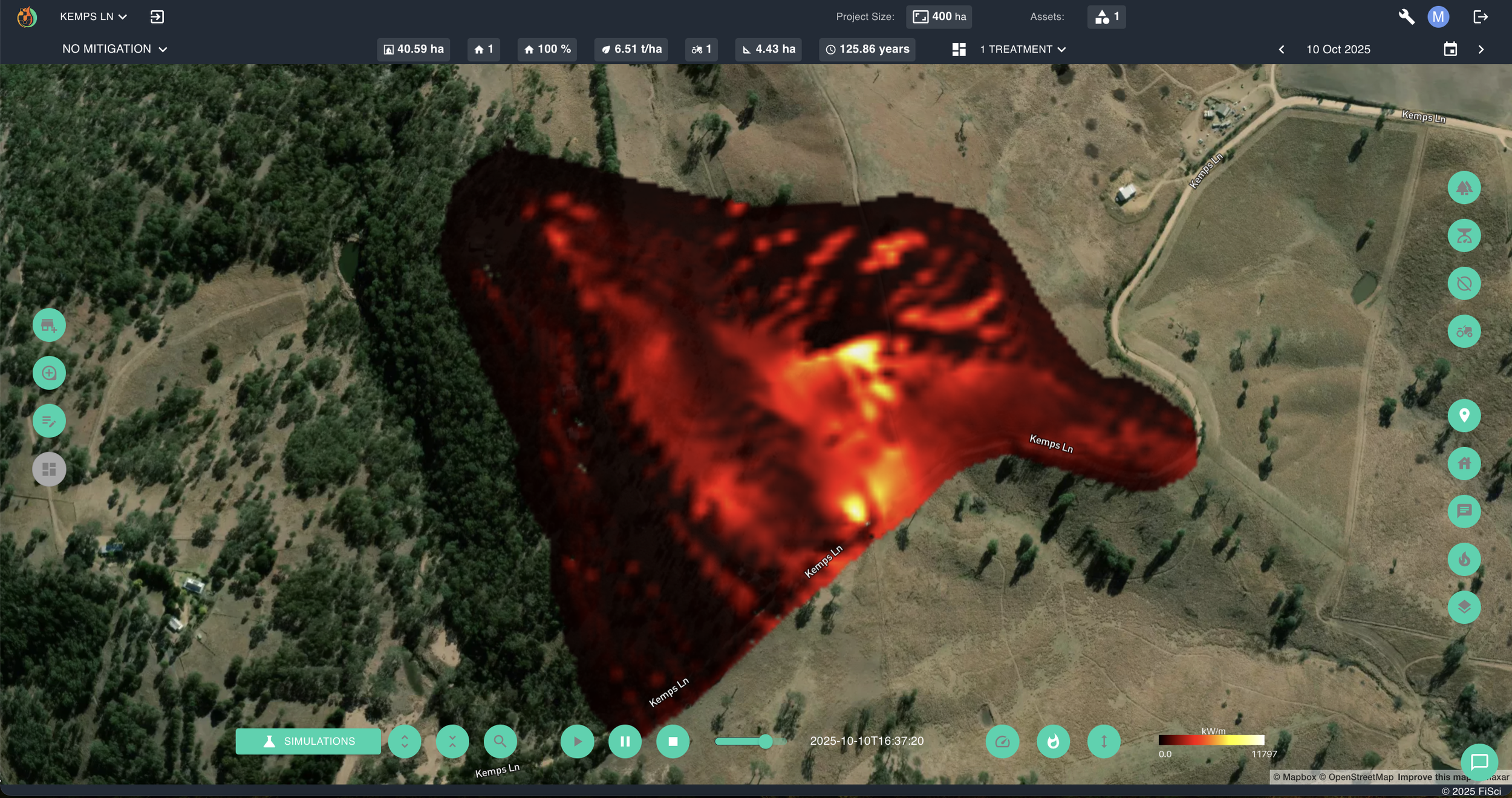
Caption: The initial simulation's prediction of the fire's spread and intensity.
Operational Timeline
This simulation represented a probable reality for the crews already engaged in suppression efforts. Shortly after midday, this simulated scenario became my reality when I received a pager alert, mobilising our crew for deployment to the incident. By that time, the simulation showed the fire had already grown significantly.
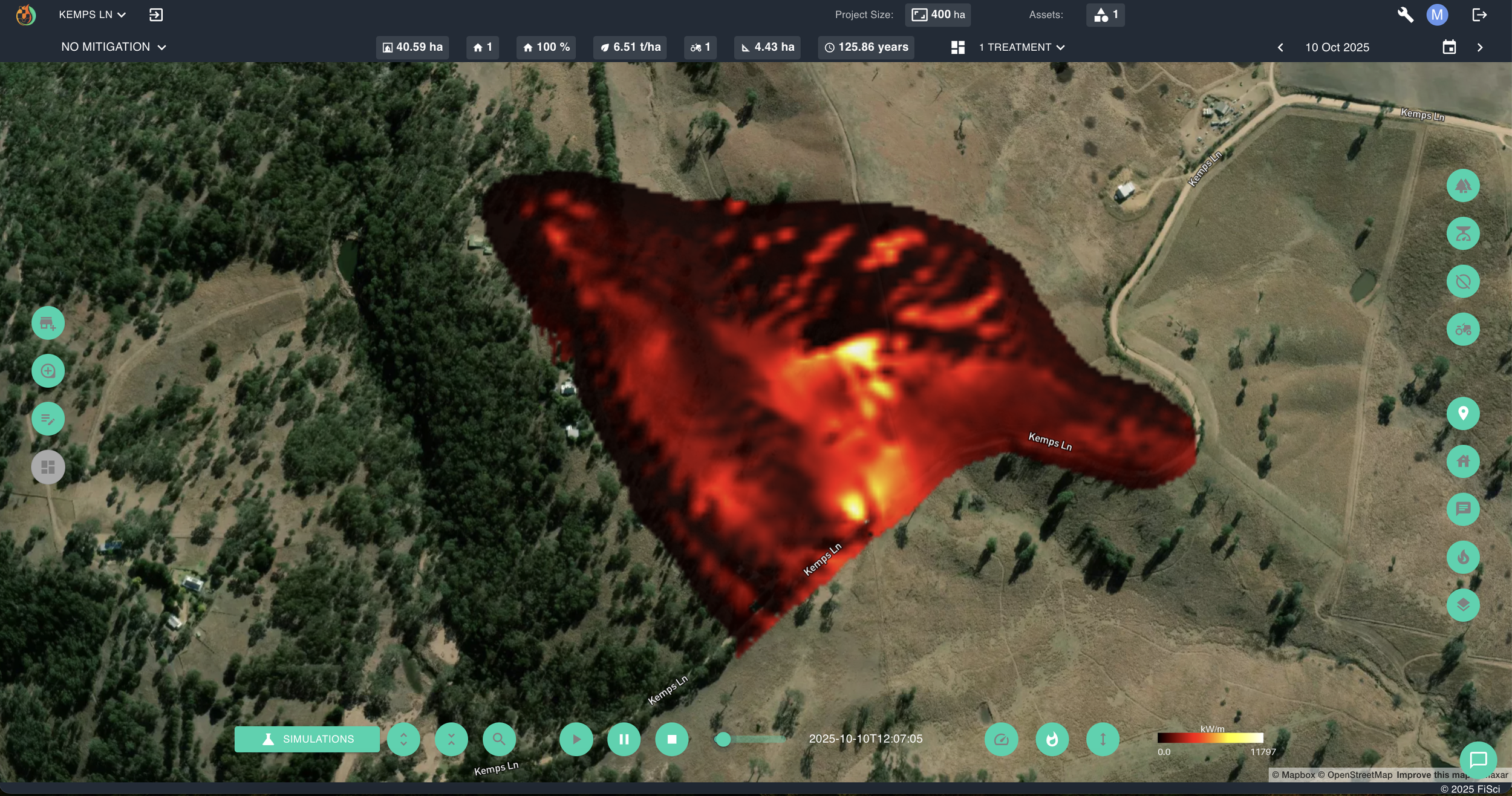
Caption: The predicted fire footprint at the time of the pager alert, shortly after midday.
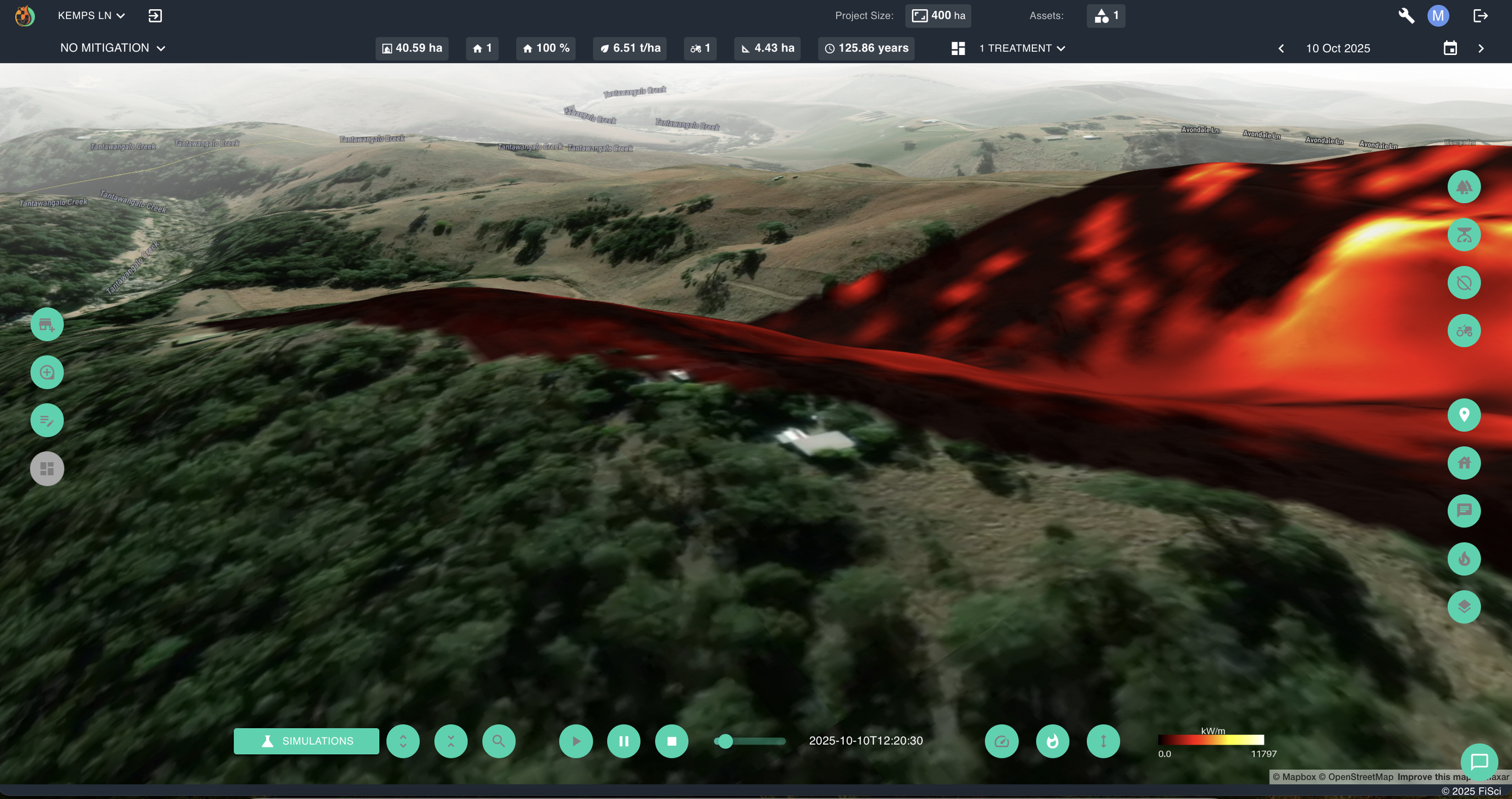
Caption: The simulated fire progression at 12:30.
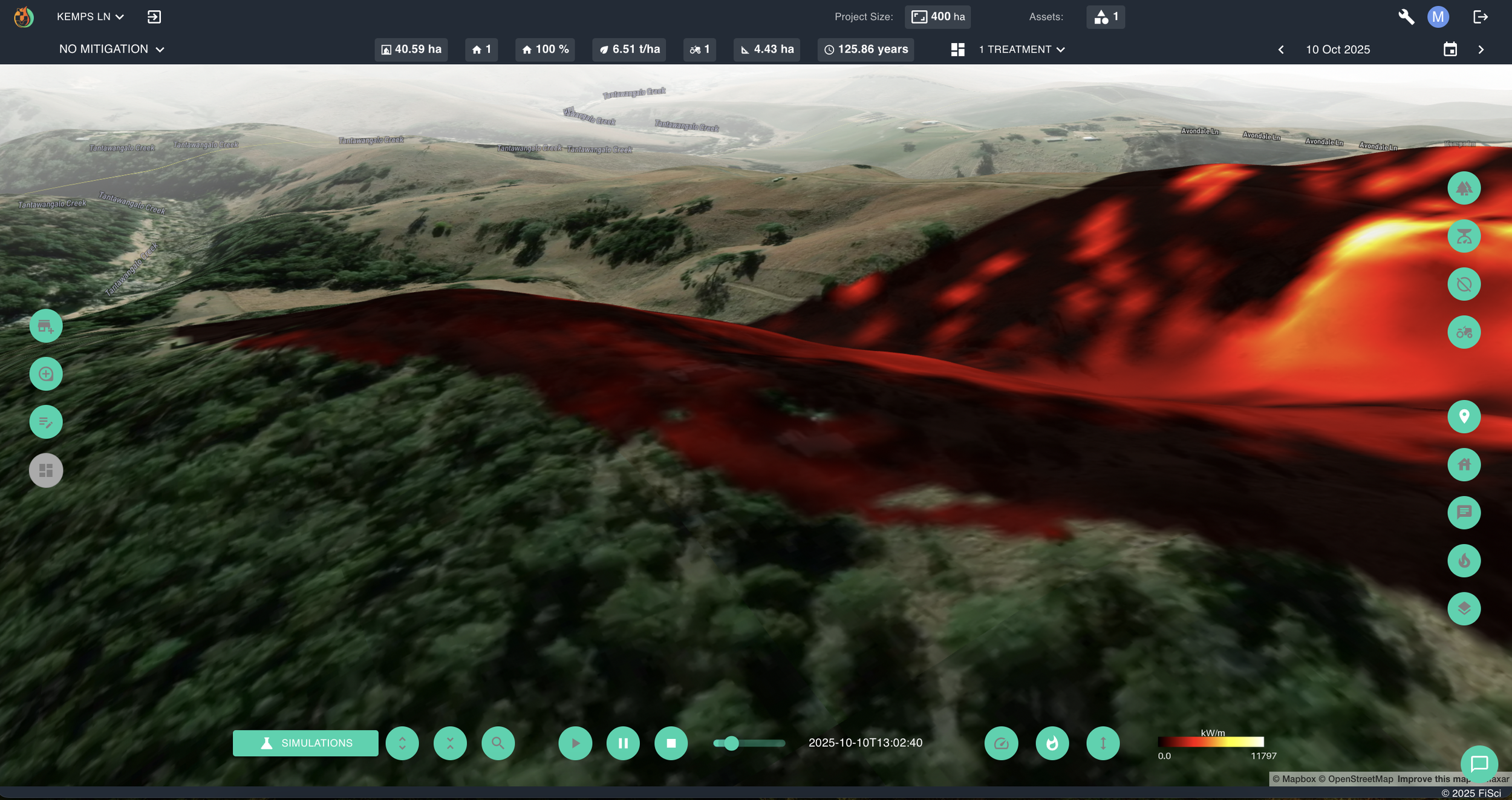
Caption: Thirty minutes later, at 13:00, the simulation shows the fire significantly intensifying as it takes runs along the hillside.
Upon our arrival at 13:00, the on-ground conditions very closely corroborated the simulation's output. The fire was making significant runs along the hillside, posing an immediate threat to nearby properties. Our crew's first tasking was to undertake property defense and slow the fire's lateral spread along the hillside. This phase of the operation constituted the most intense period of fire activity that I experienced that afternoon.
By 15:00, suppression efforts had successfully slowed the forward spread on the hillside, though the fire continued to back down the slope at a lower intensity.
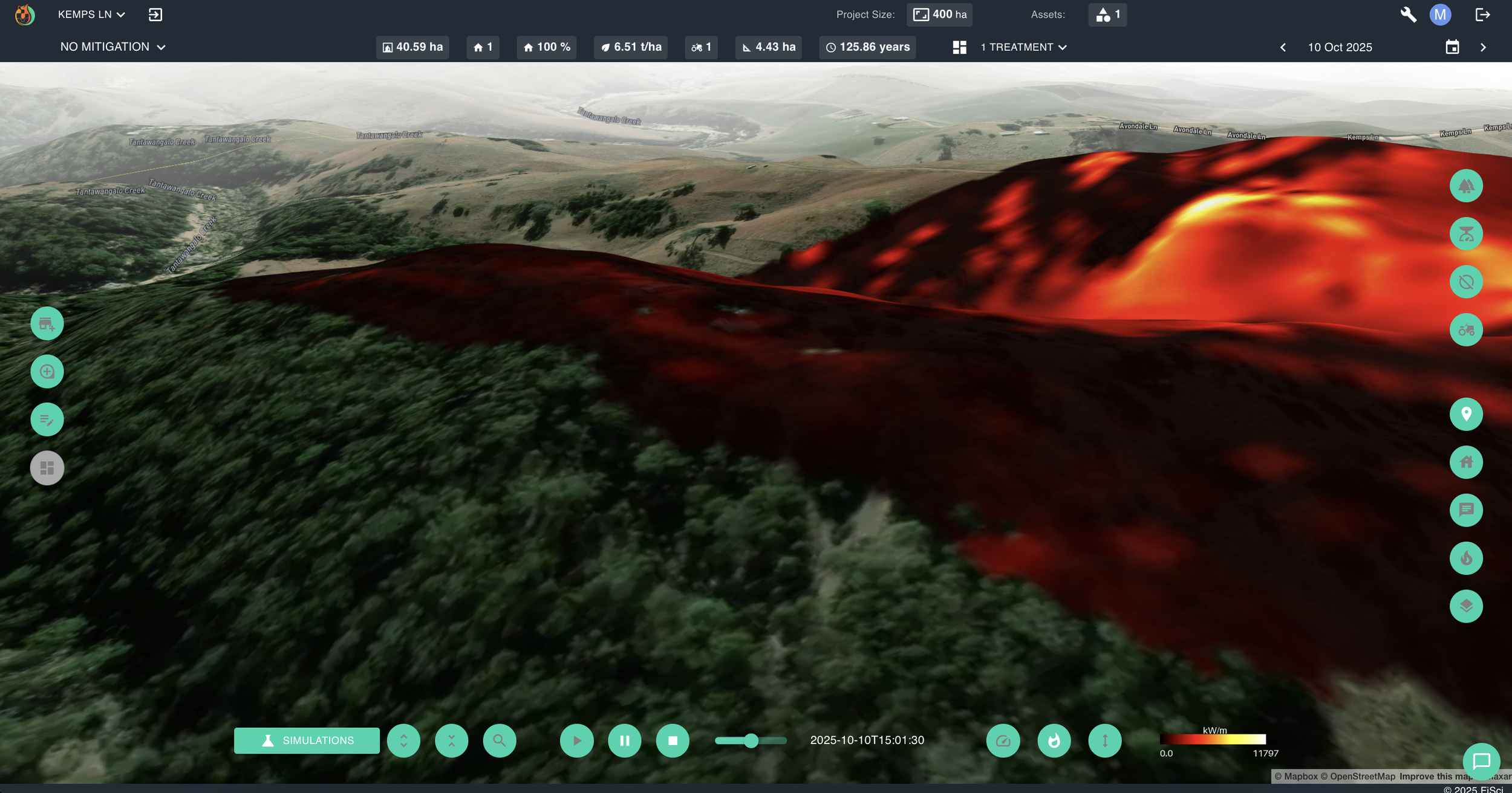
Caption: The simulation at 15:00, showing the fire backing down the hillside as the main run slows.
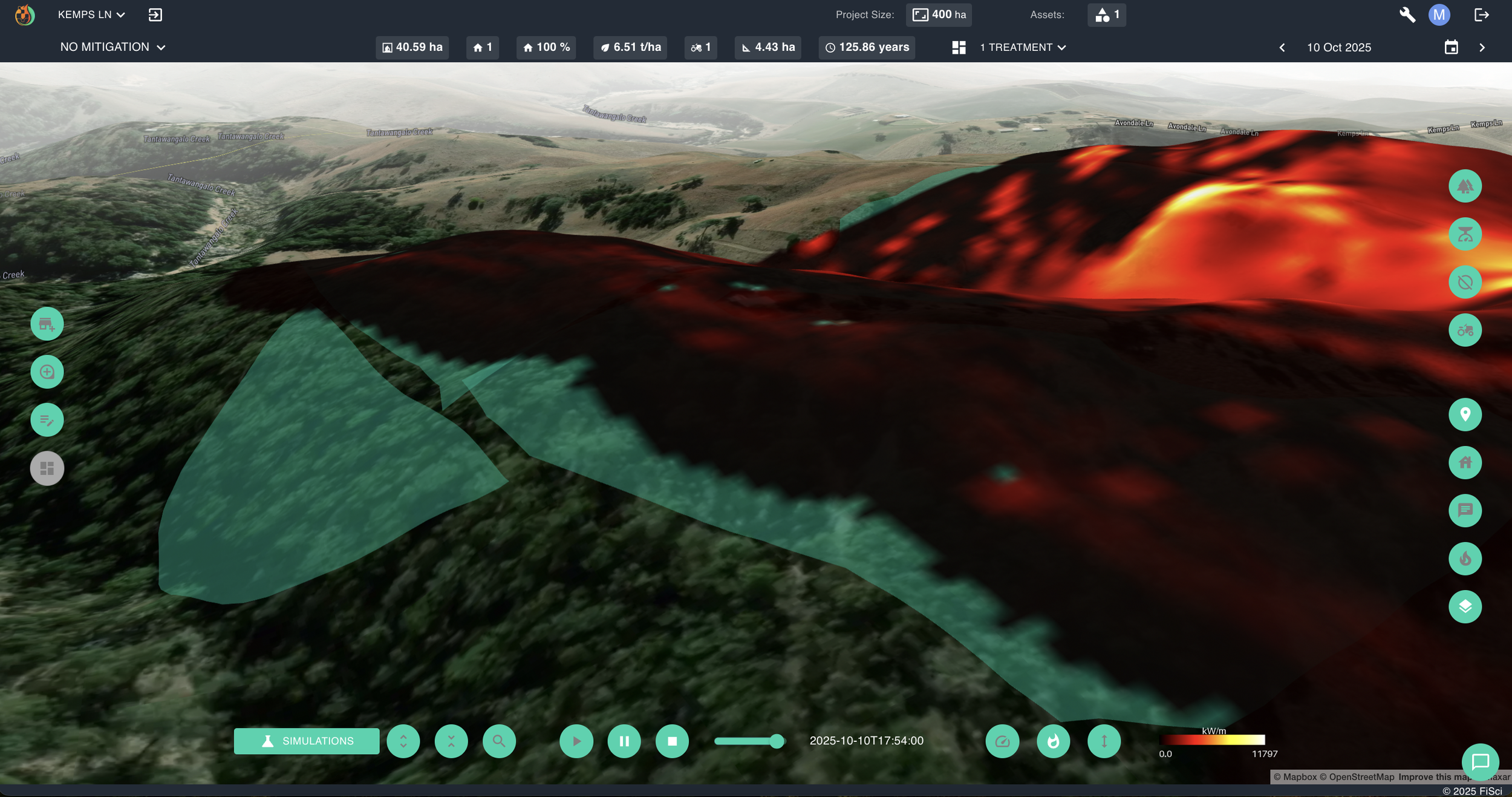
Caption: The 18:00 simulation overlaid on the actual fire footprint, demonstrating the model's accuracy through the event's lifecycle.
By 18:00, the fire had effectively pulled up against containment lines, suppression and favorable terrain, with the simulation closely matching the now-established perimeter.
Finally, at approximately 19:00, the fire was contained
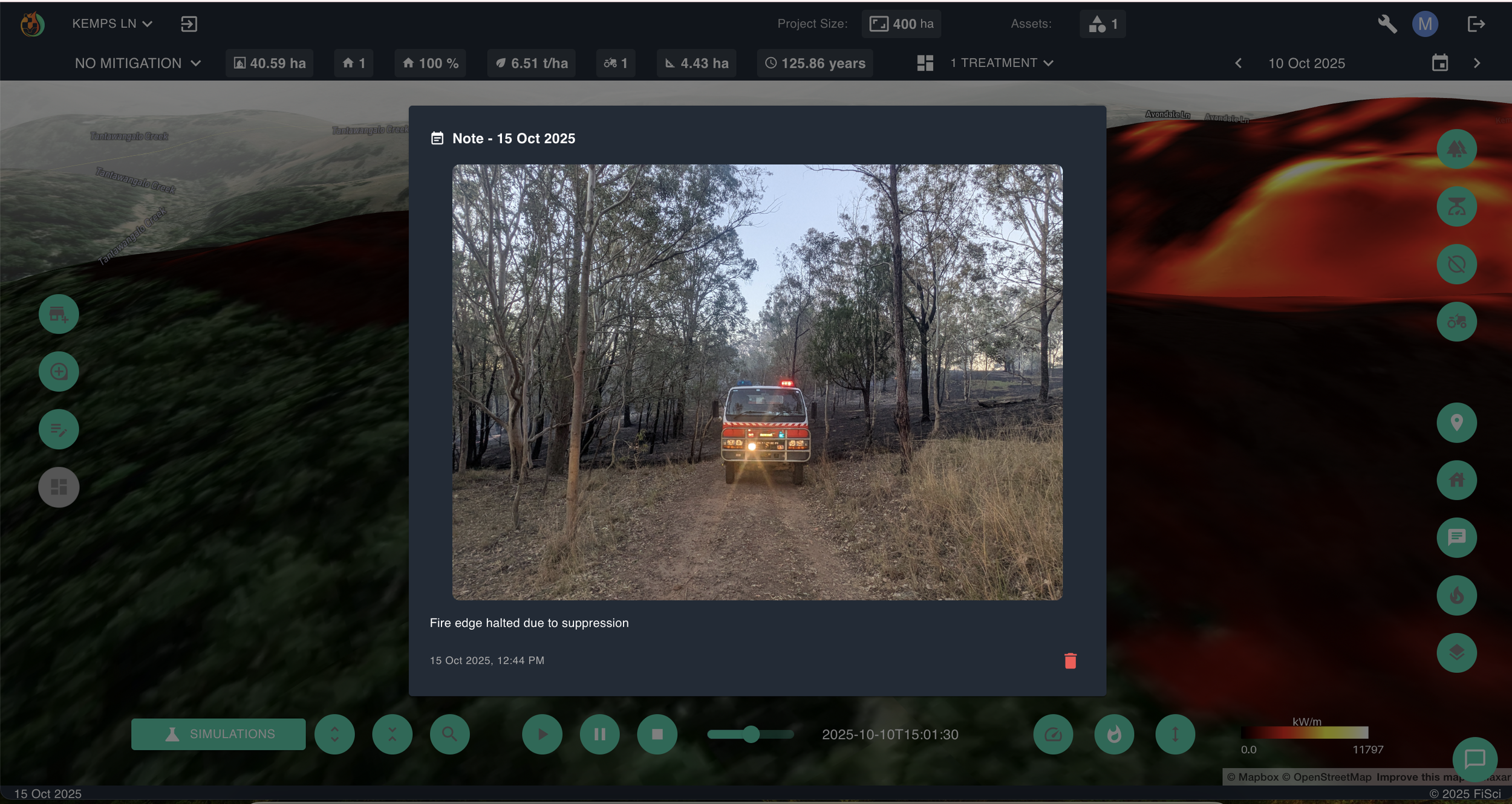
Caption: A photograph logged within the Mitigate platform showing the contained fire edge at approximately 19:00.
Post-Incident Analysis and Validation
Being physically present on the fireground, with the prior knowledge of the simulated fire spread across that exact terrain, was a notable experience. The subsequent eight-hour operational period highlighted the considerable skill and dedication of all personnel involved. Crews encountered periods of intense and challenging fire behavior while collaborating with multiple brigades to achieve containment.
Upon the cessation of operations late that evening, the fire had been successfully contained. A post-incident review of the official fire map in the subsequent days revealed a remarkable correlation with the initial simulation. The high degree of accuracy between the predicted and actual fire behavior provided a clarifying perspective on the technology's capabilities. While the correlation is strong, some differences are apparent. The unburnt patch in the middle of the final footprint, for instance, is likely the result of successful suppression efforts that were not modelled in this simulation.
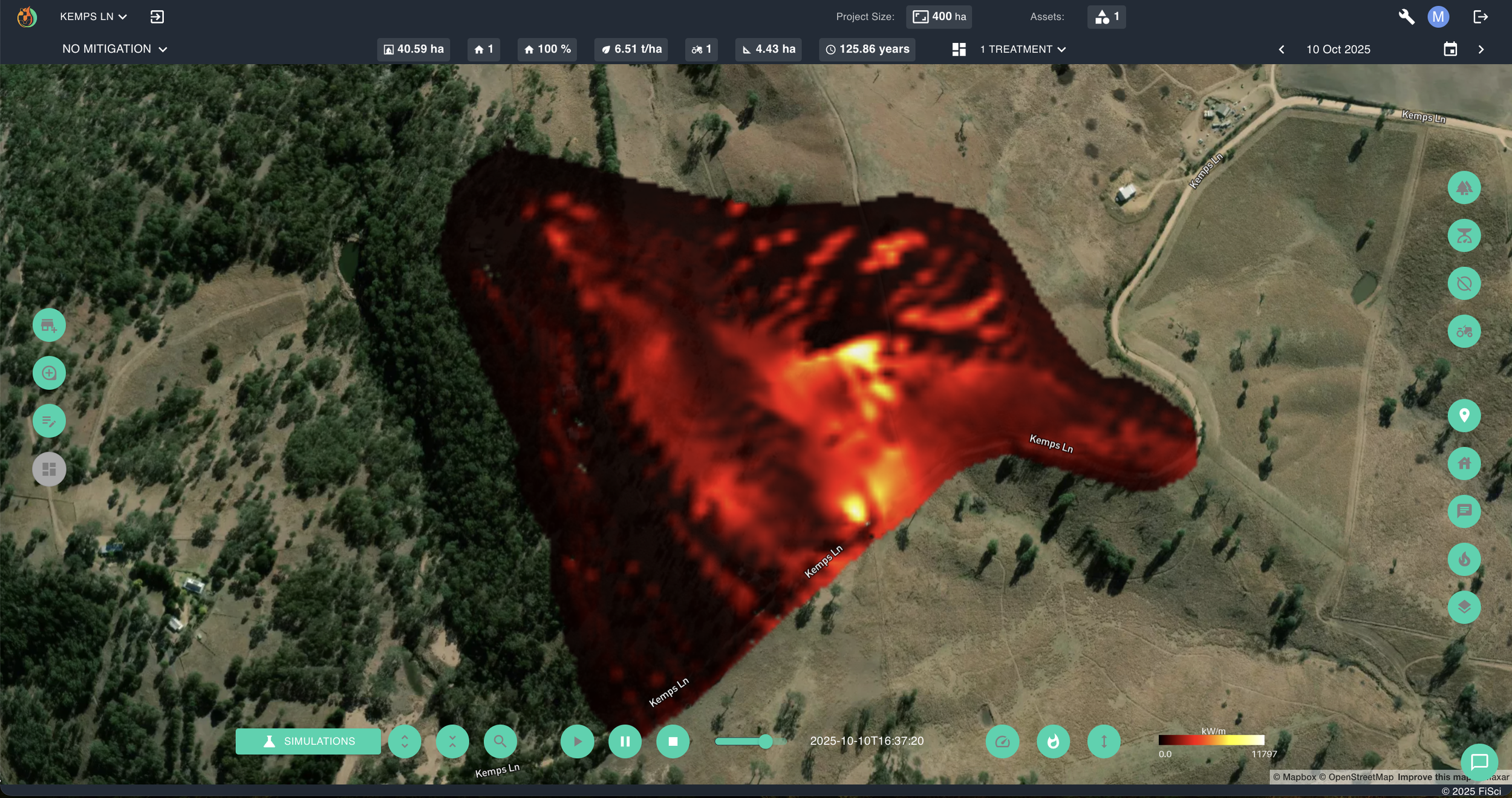
Caption: A comparative view of the predicted fire spread.
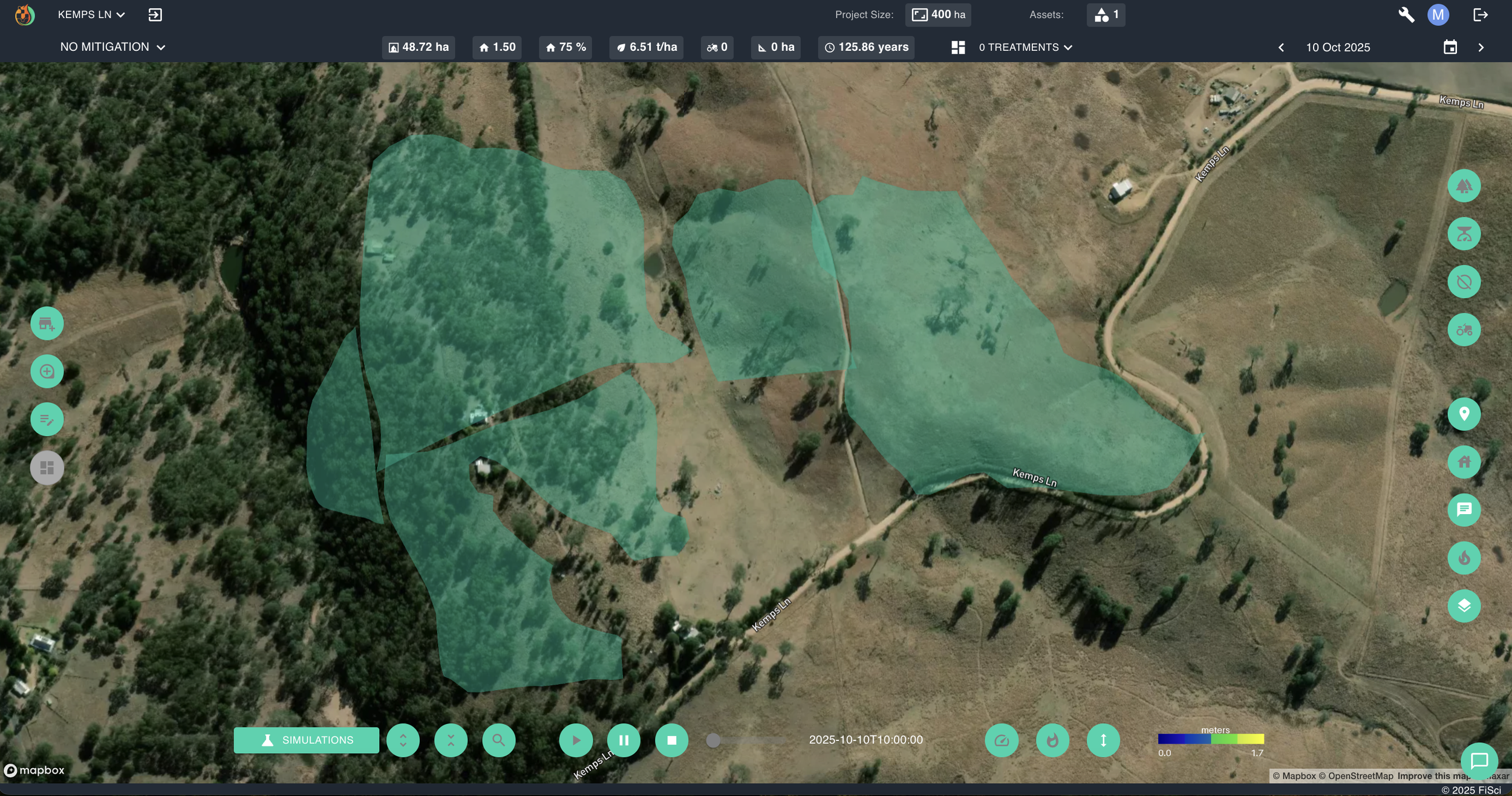
Caption: The official map of the final fire footprint.
The Role of Predictive Technology in Firefighting
It is important to emphasize that technologies such as Mitigate are not intended to replace the invaluable experience of on-ground firefighting personnel; human expertise remains the most critical component of any fire response. Rather, such tools are designed to serve as a powerful aid for informing strategic decisions and anticipating potential fire progression, offering predictive insights that can significantly assist with planning and resource allocation, particularly during the critical initial stages of an incident.
Incidents such as the one that occurred last Friday serve as a primary motivator for the ongoing development efforts at FiSci. The objective is to furnish an additional layer of actionable intelligence to support the vital work performed by emergency services. Ultimate credit for the successful containment of the Kemps Lane fire must be attributed to the numerous firefighters from across the Bega Valley who responded.
Stay safe,
Matt