
The Meatworks Escaped Hazard Reduction
A hazard reduction burn at Meatworks Avenue in Oxford Falls on September 21, 2024, escaped containment lines and became an out-of-control bushfire, threatening homes in Cromer Heights and Beacon Hill.
Due to increased wind speeds and spot fires, the situation escalated, and residents in Cromer Heights were initially advised it was too late to leave and to take shelter in place. Firefighters worked to control the blaze, which burned through about 147 hectares, but it was downgraded to an advice level later that day as conditions eased.
Incident details
What happened: A hazard reduction burn at Meatworks Avenue, Oxford Falls, became an out-of-control bushfire.
When: September 21, 2024.
Why it happened: A sudden increase in wind speeds (to 26 km/h) and embers blowing outside the containment lines caused the fire to spread rapidly.
Threatened areas: Cromer Heights and Beacon Hill.
Initial warning: At one point, residents in Cromer Heights were told it was too late to leave, and they needed to shelter in place and protect their homes from embers.
Size: The fire burned approximately 147 hectares, which was significantly larger than the 23-hectare planned hazard reduction.
Confirming Mitigate’s Accuracy
FiSci's internal exercise reviewed this incident to stretch the Mitigate platform's capabilities by:
Benchmarking the Prediction: Simulating the fire using the exact conditions (26 km/h winds) to see if Mitigate would accurately predict the fire's speed, path, and threat to the threatened suburbs.
Prescribing the Optimal Solution: Identifying how the hazard reduction could have been performed optimally. This involved Mitigate suggesting a more defensible burn strategy.
Conditions
In Mitigate we were able to pull out some of the descriptive analytics that are critical to understanding the situation at the time of the incident.

Steep and hilly terrain, moderate temperature and wind, relative humidity down to 21%

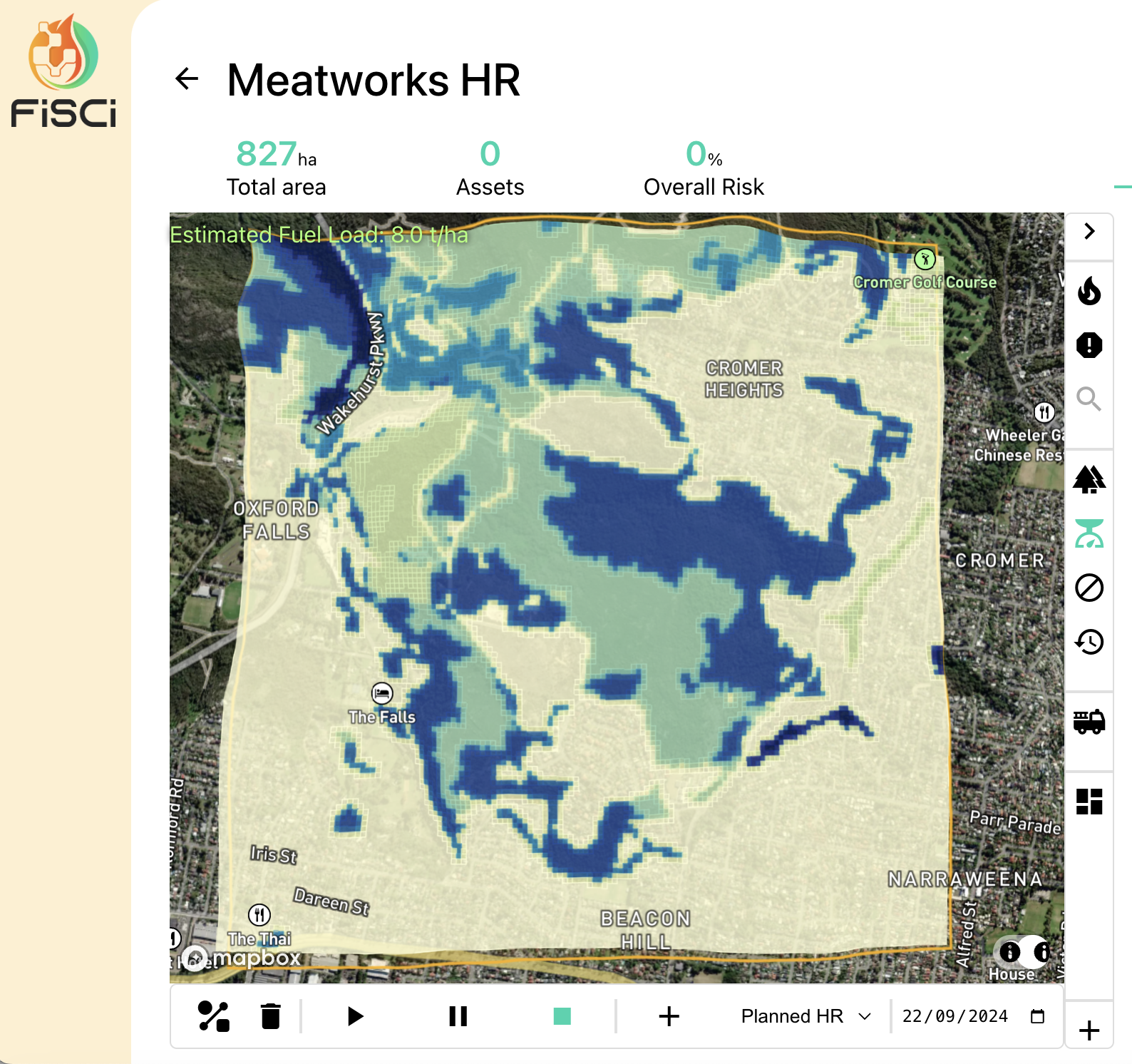
Only fire history in area was a small patch in the North, in 2006
Moderate fuel loads of 8t/ha up to 20t/ha
The Hazard Reduction
This section provides the background information for the hazard reduction and some predictive insights from Mitigate around the benefits of performing the burn.

Small (23ha) hazard reduction planned for Sat 21st Sept 2024. FiSci Mitigate estimates fuel load in burn area to be 8t/ha. HR to be ignited by aerial incendiary drop on North-Western boundary
Risk Factors cont. If the HR were to breach containment, it did not have far to travel to reach higher fuel loads of 20t/ha, drastically increasing the rate-of-spread
Risk Factors: Ignition at base of hill, winds blowing in the uphill direction, low relative humidity (20-25%)


What Actually Happened?
At the end of the incident, what was the fire scar from the event, and how did Mitigate do in predicting the footprint?

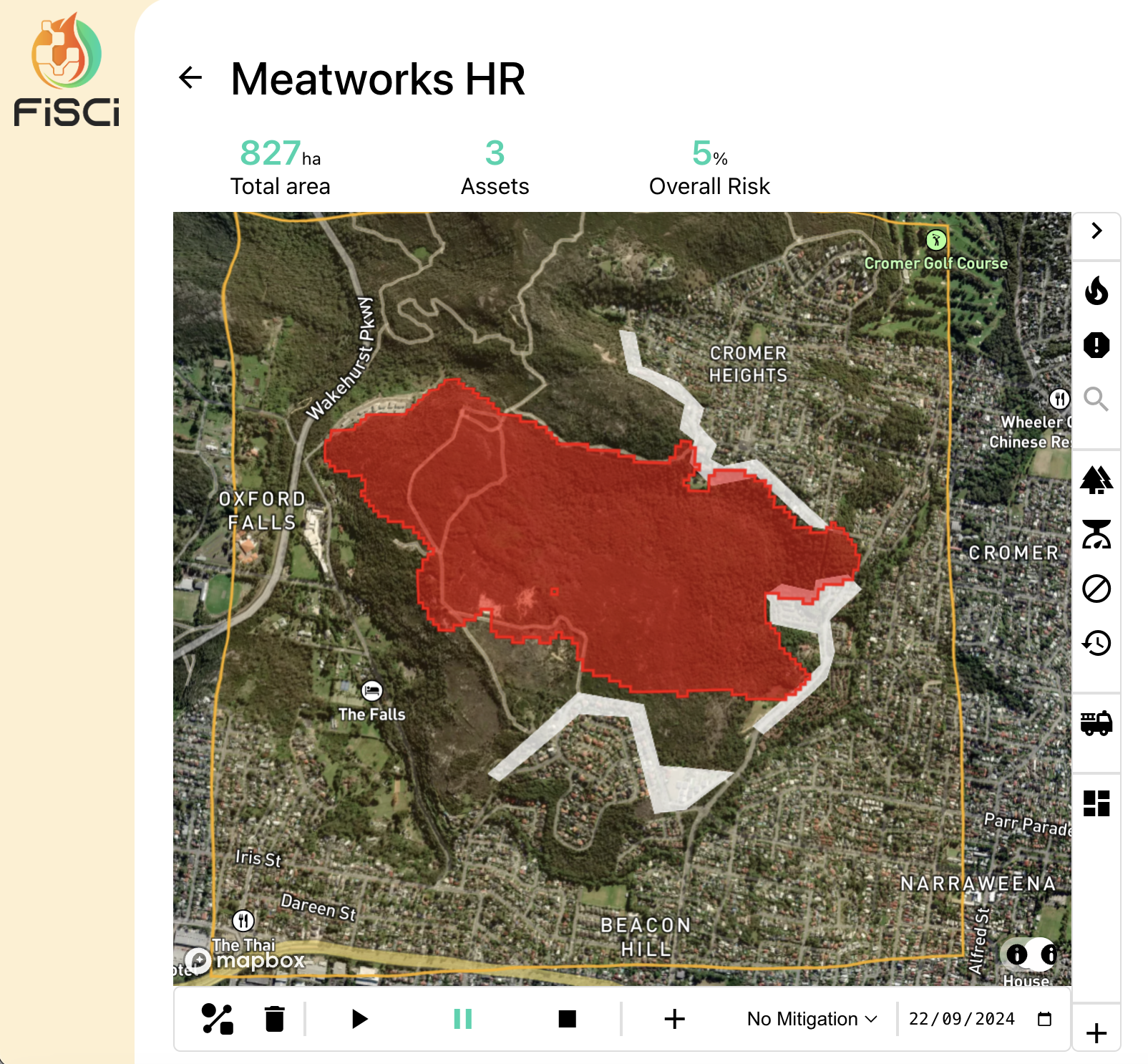
This is the actual fire scar of the incident, travelling West to East, almost encroaching into the urban interface
This is how FiSci’s Mitigate predicted that the fire would spread based on the key variables of fuel load, topography and weather conditions.
FiSCi Recommends…
Using Mitigate we built the optimal treatment strategy for the conditions in front of us.
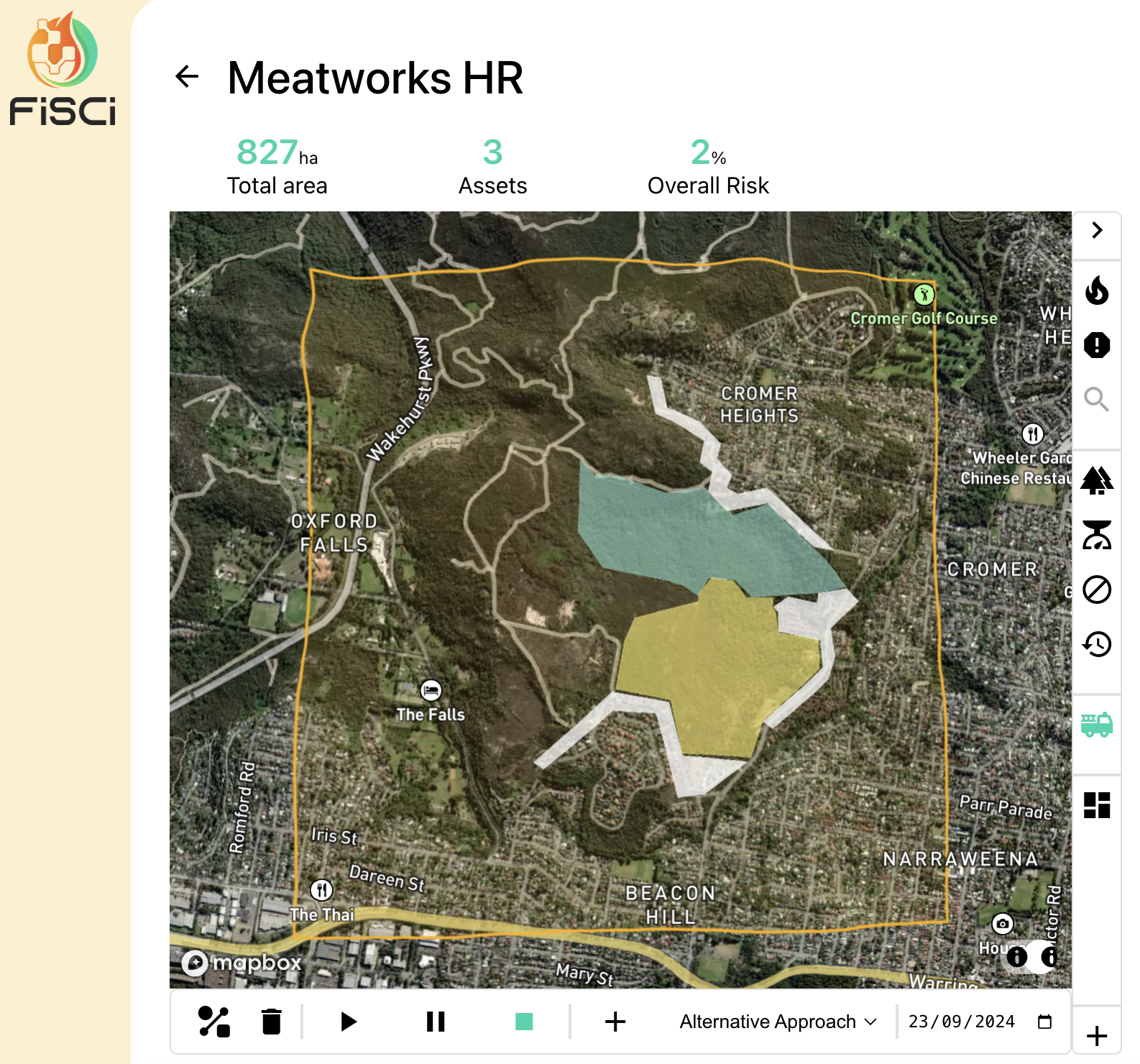
By performing two prescribed burns in the Eastern half of the bushland, we are able to bring the overall post-burn risk from 11% down to 2%.
Other benefits include:
HRs are on slopes with an Eastern aspect, meaning hot dry westerlies will be pushing in a downhill direction
Slower moving the fire
Lower chance of escape
Mitigates the areas with highest fuel load